Keynote Speakers
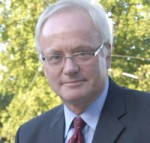
Dr. Alan Davis - Keynote SpeakerPresidentKwantlen Polytechnic University

Dr. Judith Harris - Keynote SpeakerInternational RPL Consultant, Adjunct ProfessorThompson Rivers University

Dr. Patrick Werquin - Keynote SpeakerInternational RPL Consultant; Head, OECD Thematic Review on the Recognition of Non-formal and Informal Learning; Professor Conservatoire national des arts et métiers, Paris
Summit Program
-
Click here to view the most up-to-date schedule of events.
Opening Keynote:
CROSSING BORDERS, CHARTING NEW TERRITORY
Dr. Alan Davis
President, Kwantlen Polytechnic University
Dr. Alan Davis has provided dynamic educational leadership to PLAR implementation in British Columbia, Alberta, and New York State. His experience as a senior executive with the British Columbia Open University (now Thompson Rivers University), Athabasca University, Vancouver Community College, and SUNY Empire State College (ESC) provides a unique perspective on how postsecondary institutions can form effective partnerships with employers, unions, professional association, private trainers, and government to enhance the use of PLAR.
Keynote:
RESEARCH AS THE NEXUS: CHANGING TOOLS FOR INFORMED PRACTICE
Dr. Judy Harris
International RPL Consultant;
Adjunct Professor,
Thompson Rivers University
Kamloops, BCThis presentation will build on the Prior Learning International Research Centre’s (PLIRC) new international research agenda for Prior Learning Assessment and Recognition (PLAR). Based on the recently published book: Researching the Recognition of Prior Learning: International Perspectives, the presenter will discuss the landscape of current international PLAR research. Examples and ideas will be presented of how research and practice (policy and implementation) could inform each other in synergistic ways – in BC and beyond. The potential of the new PLIRC database to enhance the research-practice relationship will also be discussed. This database will link quality international PLAR research to an online journal Prior Learning Assessment: Inside-Out, and to online discussion spaces where researchers, practitioners, and policy-makers can interact.
Keynote:
MINING OECD DATA: ASSAYING THE INTERNATIONAL FIELD
Dr. Patrick Werquin
International RPL Consultant;
Head, OECD Thematic Review on the Recognition of Non-formal and Informal Learning;
Professor Conservatoire national des arts et métiers, ParisDr. Patrick Werquin headed a massive OECD study of PLAR policy and practice in 22 countries commencing in 2006. The study provided an overview of the key issues involved in recognizing non-formal and informal learning, ranging from the legitimacy of the learning activities themselves (in terms of the outcomes to be recognized), to the cost of the necessary assessment and the essential elements such as quality assurance standards used, potential benefits and real obstacles. This presentation will highlight how the findings could be examined to yield insights of practical use to PLAR stakeholders in B.C. as they work to develop an effective PLAR system for the province.
EMBEDDING RPL IN HUMAN RESOURCE MANAGEMENT PRACTICE: LEARNING FROM DOWNUNDER
Dr. Roslyn Cameron
Faculty of Arts, Business, Informatics and Education Central Queensland University, AustraliaAustralia introduced Recognition of Prior Learning (RPL) as part of a national training reform agenda that included the introduction of a competency-based vocational education and training system, a national qualification system, and training packages. RPL is now a standard and requirement of any offering of accredited training that is embedded in the Australian Qualifications Framework (AQF). As time has progressed and RPL policy and practice has evolved, it has become central to the vocational education and training (VET) sector. RPL is also a growing activity outside the education sector, impacting on human capital and workforce development policy and initiatives. This presentation will take the Human Resource management perspective, highlighting the author’s work with skilled migrants (e.g. Cameron, 2010).
RESEARCH INFORMING PRACTICE, PRACTICE INSPIRING RESEARCH: A PRACTITIONER’S TALE
Dr. Dianne Conrad
Director, Centre for Learning Accreditation, Athabasca UniversityThis presentation will draw on Dianne Conrad’s experience as a SSHRC-funded scholar in the PLAR field and the Director of the Centre for Learning Accreditation at Athabasca University. The focus of the presentation will be the reciprocal relationship of research to practice and the role of this relationship in enhancing adult education praxis (Freire, 1970). The author will discuss how her professional practice, when seen through a researcher’s lens, has been a highly enriching source for her scholarly publications. In turn, she will describe how research findings are incorporated into improving the learning experience and quality of service provided to Athabasca’s students.
TREADING A FINE LINE: RPL AS POTENTIALLY DIVISIVE DISCOURSE
Dr. Linda Cooper
Lecturer, School of Education, University of Cape Town, South AfricaIn South Africa, PLAR became an underlying principle of education policy after 1990, largely as a result of initiatives by the trade unionists and workplace trainers associated with the various National Training Boards (Breier, 2011). The author (Cooper, 1998) provides a brief historical overview of the growth of the trade union movement in South Africa and locates RPL within a shift in trade union education from a ‘transformative’ to a ‘human capital’ discourse (ibid., p. 144) that has the potential to divide rather than unite workers. She has since developed this theme in a case study of a branch of a national, municipal trade union, reported in Cooper (2006) and her own PhD thesis (Cooper, 2005). An active trade union educator, the author will discuss how her research has informed her practice, and what she has learned from research on this topic conducted in other national contexts.
BIRTHING PAINS: STRUGGLE AND FULFILLMENT IN ACCREDITING PRIOR LEARNING
Ms. Helen Pokorny
Principal Lecturer/Course Leader, University of Westminster, UKPrior learning accreditation & Recognition (PLAR) is now on the agenda of Higher Education providers around the globe. At a national level PLAR is often heralded as having a role in education policy, labour force development and in addressing labour market inequalities. Nevertheless PLAR struggles to establish itself as part of mainstream post compulsory education in many countries around the world. As a result of these struggles, the tensions around PLAR and its implementation have increasingly become the subject of research. This presentation will consider the different models of PLAR in Higher Education that have developed around the world, the contexts from which they have arisen and the theoretical lens’ that have been used to research them. The discussion will focus on what recent research findings have to say about bringing diverse sites of knowledge acquisition into the mainstream and the models of practice that might support this.
MONA PIELORZ PRESENTATION – TITLE TBD
Ms. Mona Pielorz
Dipl. Päd.,
German Institute for Adult Education – Leibniz Centre for Lifelong LearningThis presentation evaluates the “ProfilPASS”, an biographic-systematic instrument used in Germany to record formally, non-formally and informally acquired competence, and learners’ experiences with using it. The speaker will provide information about what is needed to develop a successful instrument and about the importance of coaching or guidance is for the people going through the various stages of the ProfilPASS process and those following.
PRACTITIONER TRAINING: GOLD STANDARD FOR PLAR IMPLEMENTATION SUCCESS
Dr. Nan Travers
Empire State College, New YorkIn Assessing Learning: Standards, Principles, and Procedures, Fiddler et al. (2006, p. 16) state that ‘assessment should be based on standards and criteria for the level of acceptable learning that are both agreed upon and made public’. Achieving this standard requires trained personnel at every step of the PLAR process. Empire State College has over a thousand students involved in PLAR at any given time, so understand that training is critical to ensuring quality. In addition to discussing research underway at Empire State College, the presenter will survey relevant international research.
WHAT’S IN A NAME? PLAR FOR REGISTRATION OF INTERNATIONALLY EDUCATED HEALTH PROFESSIONALS
Dr. Joy Van Kleef
Canadian Institute for Recognizing Learning, TorontoRegulatory bodies are faced annually with thousands of applications for licensing from internationally educated immigrant professionals. Regulatory bodies have responded by exploring the potential of PLAR to identify immigrant applicants’ true qualifications. These developments been facilitated in Canada by fairness legislation which requires regulatory bodies to ensure that immigrant applicants are treated as fairly as domestic educational program graduates. However, no research has been conducted on the quality of PLAR in regulated professions. Practices are growing without the benefit of shared understandings of what ‘quality’ means and with all of the risks of inadequate, inconsistent processes and invalid, unreliable outcomes. In her presentation, Ms. Van Kleef will draw on international research, learning theory and assessment practice to propose a framework for establishing, evaluating and improving PLAR in regulated professions.
COUNCIL FOR THE ADVANCEMENT OF NATIVE DEVELOPMENT OFFICERS AND PLA: LOOKING BACK, LOOKING FORWARD
Professor Warren Weir
Nicola Valley Institute of TechnologyIn 1990, Aboriginal economic development officers from across Canada founded the Council for the Advancement of Native Development Officers (Cando). Over the past 32 years, Cando has become the premier national organization devoted to the promotion of a high standard of economic development activities in Aboriginal communities across Canada. One of Cando’s important and ongoing accomplishments has been the development and implementation of a national training and professional certification program for economic development officers working in, with, and for Aboriginal communities and organizations. Individuals seeking to fulfil the certification requirements are able to do so through prior learning assessment (PLA). This presentation will 1) provide an overview of Cando, 2) clarify Cando’s training and professional certification process, 3) focus on the PLA component of Cando’s certification strategy, 4) highlight the challenges and rewards Cando has been faced with while following a PLA certification process, and 5) ponder future directions for the use of PLA (given the younger demographic of the Aboriginal population in Canada) for the certification of Aboriginal economic development officers in Canada.
FROM THEORY TO PRAXIS: THE HIGHWAYS AND BYWAYS OF SCOTLAND
Prof. Ruth Whittaker
Head of the Centre for Learning and Development, Glasgow Caledonian University, UKThis presentation will highlight the role that research has played in Scotland’s policy driven and development-based approach to PLAR implementation. Recent and current research focuses on national and sector-based models and approaches in order to extend scope and accessibility. The profile of PLAR has dramatically increased as a result of the Scottish Credit and Qualifications Framework (SCQF) which has generated renewed enthusiasm and momentum since 2005, increasingly driven by a workforce development agenda linked to employability and skills development. Recent research has been led and funded by national and European governments. Although there is an emphasis on research and development (scoping exercises, iterative piloting and network building), this does not preclude theoretical work, and Scotland has led the way in developing practical approaches to RPL that build on social identity theory. Parallels will be drawn to the role of research in influencing policy in the EU and other international contexts.
Navigating the Complex World of University Learning: Insights for PLAR Practitioners and Advocates
Dr. Angie Wong
Professor Emeritus and former Director of the Centre for Distributed Learning and Instructional Design Group, University of SaskatchewanThe role of the PLAR practitioner encompasses functions that enable learners of all backgrounds to receive recognition and credit for what they know and can do. To enable adult learners to successfully navigate the complex world of university learning, PLAR practitioners from the community and industry can arm themselves with an understanding of the cultural values and practices of different academic disciplines. This understanding can enable them to better support PLAR applicants in organizing and documenting their learning for assessment. This presentation will familiarize you with university practices that are tacitly transmitted to students immersed in full time study and are often key to academic success. These include the kind of language used, the preferred modes of inquiry, and criteria for validating knowledge. The presentation will also discuss the strategic recruitment of PLAR assessors who are more likely to be sympathetic to the difficulties adult learners face – faculty members who are currently involved in university-sponsored experiential learning programs.