Keynote Speakers
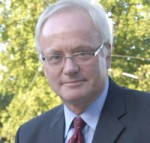
Dr. Alan Davis - Keynote SpeakerPresidentKwantlen Polytechnic University

Dr. Judith Harris - Keynote SpeakerInternational RPL Consultant, Adjunct ProfessorThompson Rivers University

Dr. Patrick Werquin - Keynote SpeakerInternational RPL Consultant; Head, OECD Thematic Review on the Recognition of Non-formal and Informal Learning; Professor Conservatoire national des arts et métiers, Paris
Program
-
- March 25, 2013
- 6:30 pm - 8:30 pmTRU Reception
- March 26, 2013
- 7:30 am - 8:30 amContinental Breakfast, Registration
- 8:30 am - 9:00 amWelcome and Vision
- 9:00 am - 9:30 amOpening Keynote
Dr. Alan Davis
President, Kwantlen Polytechnic University - 9:30 am - 10:15 amRESEARCH INFORMING PRACTICE, PRACTICE INSPIRING
RESEARCH: A PRACTITIONER’S TALEDr. Dianne Conrad
Director, Centre for Learning Accreditation, Athabasca UniversityThis presentation will draw on the author’s experience as a SSHRC-funded scholar in the PLAR field and the Director of the Centre for Learning Accreditation at Athabasca University. The focus of the presentation will be the reciprocal relationship of research to practice and the role of this relationship in enhancing adult education praxis (Freire, 1970). The author will discuss how her professional practice, when seen through a researcher’s lens, has been a highly enriching source for her scholarly publications. In turn, she will describe how research findings are incorporated into improving the learning experience and quality of service provided to Athabasca’s students.
- 10:15 am - 10:30 amREFLECTIONS AND LESSONS TOWARDS ACHIEVING
BC PLAN’S STRATEGIC GOALSMary Morrissey
Ms. Mary Morrissey, our conference facilitator, will offer thoughts on how she sees the ideas from the research presentations informing the future direction of BC PLAN. She will pose questions for small group discussion.
Executive Director, PLA Centre - 10:30 am - 11:00 amCoffee
- 11:00 am - 12:00 pmSMALL GROUP DISCUSSIONSFacilitators: TBA
- 12:00 pm - 1:00 pmLunch
- 12:30 pm - 1:15 pmMINING OECD DATA: ASSAYING THE
INTERNATIONAL FIELDDr. Patrick Werquin
Dr. Patrick Werquin headed a massive OECD study of PLAR policy and practice in 22 countries commencing in 2006. The study provided an overview of the key issues involved in recognizing non-formal and informal learning, ranging from the legitimacy of the learning activities themselves (in terms of the outcomes to be recognized), to the cost of the necessary assessment and the essential elements such as quality assurance standards used, potential benefits and real obstacles. This presentation will highlight how the findings could be examined to yield insights of practical use to PLAR stakeholders in B.C. as they work to develop an effective PLAR system for the province.
International RPL Consultant;
Head, OECD Thematic Review on the Recognition of Non-formal and Informal Learning;
Professor Conservatoire national des arts et métiers, Paris - 1:30 pm - 2:15 pm(CONCURRENT SESSIONS)
EMBEDDING RPL IN HUMAN RESOURCE MANAGEMENT
PRACTICE: LEARNING FROM DOWNUNDERDr. Roslyn Cameron
Faculty of Arts, Business, Informatics and Education Central Queensland University, AustraliaAustralia introduced Recognition of Prior Learning (RPL) as part of a national training reform agenda that included the introduction of a competency-based vocational education and training system, a national qualification system, and training packages. RPL is now a standard and requirement of any offering of accredited training that is embedded in the Australian Qualifications Framework (AQF). As time has progressed and RPL policy and practice has evolved, it has become central to the vocational education and training (VET) sector. RPL is also a growing activity outside the education sector, impacting on human capital and workforce development policy and initiatives. This presentation will take the Human Resource management perspective, highlighting the author’s work with skilled migrants (e.g. Cameron, 2010).
- 1:30 pm - 2:15 pm(CONCURRENT SESSIONS)
TREADING A FINE LINE: RPL AS POTENTIALLY
DIVISIVE DISCOURSEDr. Linda Cooper
Lecturer, School of Education, University of Cape Town, South AfricaIn South Africa, PLAR became an underlying principle of education policy after 1990, largely as a result of initiatives by the trade unionists and workplace trainers associated with the various National Training Boards (Breier, 2011). The author (Cooper, 1998) provides a brief historical overview of the growth of the trade union movement in South Africa and locates RPL within a shift in trade union education from a ‘transformative’ to a ‘human capital’ discourse (ibid., p. 144) that has the potential to divide rather than unite workers. She has since developed this theme in a case study of a branch of a national, municipal trade union, reported in Cooper (2006) and her own PhD thesis (Cooper, 2005). An active trade union educator, the author will discuss how her research has informed her practice, and what she has learned from research on this topic conducted in other national contexts.
- 2:15 pm - 3:00 pmPRACTITIONER TRAINING: GOLD STANDARD
FOR PLAR IMPLEMENTATION SUCCESSDr. Nan Travers
Empire State College, New YorkIn Assessing Learning: Standards, Principles, and Procedures, Fiddler et al. (2006, p. 16) state that ‘assessment should be based on standards and criteria for the level of acceptable learning that are both agreed upon and made public’. Achieving this standard requires trained personnel at every step of the PLAR process. Empire State College has over a thousand students involved in PLAR at any given time, so understand that training is critical to ensuring quality. In addition to discussing research underway at Empire State College, the presenter will survey relevant international research.
- 3:00 pm - 3:15 pmREFLECTIONS AND LESSONS TOWARDS ACHIEVING
BC PLAN’S STRATEGIC GOALSMary Morrissey
Executive Director, PLA CentreMs. Mary Morrissey, our conference facilitator, will offer thoughts on how she sees the ideas from the research presentations informing the future direction of BC PLAN. She will pose questions for small group discussion.
- 3:15 pm - 3:45 pmCoffee
- 3:45 pm - 5:00 pmSMALL GROUP DISCUSSIONSFacilitators: TBA
- 5:00 pm - 7:00 pmBCPLAN MEETING & RECEPTIONA reception for BCPLAN members.
- March 27, 2013
- 7:30 am - 8:30 amCoffee
- 8:30 am - 8:45 amINTRODUCTION TO DAY TWO
Christine Wihak,
Director, PLAR, TRUWendy Watson,
President, BCPLAN - 8:45 am - 9:30 amFROM THEORY TO PRAXIS: THE HIGHWAYS
AND BYWAYS OF SCOTLANDProf. Ruth Whittaker
Head of the Centre for Learning and Development, Glasgow Caledonian University, UKThis presentation will highlight the role that research has played in Scotland’s policy driven and development-based approach to PLAR implementation. Recent and current research focuses on national and sector-based models and approaches in order to extend scope and accessibility. The profile of PLAR has dramatically increased as a result of the Scottish Credit and Qualifications Framework (SCQF) which has generated renewed enthusiasm and momentum since 2005, increasingly driven by a workforce development agenda linked to employability and skills development. Recent research has been led and funded by national and European governments. Although there is an emphasis on research and development (scoping exercises, iterative piloting and network building), this does not preclude theoretical work, and Scotland has led the way in developing practical approaches to RPL that build on social identity theory. Parallels will be drawn to the role of research in influencing policy in the EU and other international contexts.
- 9:30 am - 10:15 am(CONCURRENT SESSIONS)
BIRTHING PAINS: STRUGGLE AND FULFILLMENT IN
ACCREDITING PRIOR LEARNINGMs. Helen Pokorny
Principal Lecturer/Course Leader, University of Westminster, UKInfluenced by theories and models of experiential and reflective learning, APEL was introduced in the UK by a small number of institutions through projects that aimed at widening participation. In the late 1990s, APEL gained increased momentum through its profile in national policy as part of debates around lifelong learning (Fryer, 1997) and at the same time, more targeted developments took place in response to professional body requirements, particularly in nursing and midwifery. This presentation will focus on what recent research findings have to say about bringing diverse sites of knowledge acquisition into the mainstream, including the author’s own research on practices that maintain barriers to accrediting prior learning.
- 9:30 am - 10:15 am(CONCURRENT SESSIONS)
WHAT’S IN A NAME? PLAR FOR REGISTRATION OF
INTERNATIONALLY EDUCATED HEALTH PROFESSIONALSDr. Joy Van Kleef
Canadian Institute for Recognizing Learning, TorontoRegulatory bodies are faced annually with thousands of applications for licensing from internationally educated immigrant professionals. Regulatory bodies have responded by exploring the potential of PLAR to identify immigrant applicants’ true qualifications. These developments been facilitated in Canada by fairness legislation which requires regulatory bodies to ensure that immigrant applicants are treated as fairly as domestic educational program graduates. However, no research has been conducted on the quality of PLAR in regulated professions. Practices are growing without the benefit of shared understandings of what 'quality' means and with all of the risks of inadequate, inconsistent processes and invalid, unreliable outcomes. In her presentation, Ms. Van Kleef will draw on international research, learning theory and assessment practice to propose a framework for establishing, evaluating and improving PLAR in regulated professions.
- 10:15 am - 10:45 amCoffee
- 10:45 am - 11:00 amREFLECTIONS AND LESSONS TOWARDS ACHIEVING
BC PLAN’S STRATEGIC GOALSMary Morrissey
Ms. Mary Morrissey, our conference facilitator, will offer thoughts on how she sees the ideas from the research presentations informing the future direction of BC PLAN. She will pose questions for small group discussion.
Executive Director, PLA Centre - 11:00 am - 12:00 pmSMALL GROUP DISCUSSIONSFacilitators: TBA
- 12:00 pm - 12:45 pmLunch
- 12:45 pm - 1:30 pmKeynote Speaker: Dr. Judy Harris
RESEARCH AS THE NEXUS: CHANGING
TOOLS FOR INFORMED PRACTICEDr. Judy Harris
International RPL Consultant;
Adjunct Professor,
Thompson Rivers University
Kamloops, BCThis presentation will build on the Prior Learning International Research Centre’s (PLIRC) work identifying and promoting a new international research agenda for the field of Prior Learning Assessment & Recognition (PLAR). First, based on the recently published book Researching the Recognition of Prior Learning: International Perspectives, the presenter will discuss major themes that emerged internationally in the research, and major gaps in the existing body of research (Harris, 2011). Information will be provided on the new Prior Learning International Research Nexus, which uses social networking tools to link a database of international PLAR research, on-line journal Prior Learning Inside-Out, and on-line discussion spaces where researchers, practitioners, and policy-makers can interact. Finally, the presenter will highlight how research can assist practitioners and policy-makers to enhance the implementation of PLAR in the province of BC.
- 1:30 pm - 2:00 pmPlenary panel: BC PLAN and PLIRC reps in conversation Moderator: Angie Wong Panel: BC PLAN reps (Christine Wihak, Judy Harris, TBD)
- March 25, 2013